A failing retaining wall rarely lets go all at once — it almost always warns you first. The trouble is that those early signs are easy to ignore until, after a big Sunshine Coast wet season, a slow lean turns into a sudden collapse. Knowing what to look for means you can fix a small problem cheaply instead of paying for a full rebuild. Here’s why retaining walls fail and the warning signs worth acting on.
The Number One Reason Walls Fail: Water
Most retaining walls don’t fail because the wall itself is weak — they fail because water builds up behind them. When rain saturates the soil and there’s nowhere for it to drain, the trapped water creates enormous pressure against the back of the wall. On the Sunshine Coast, where a single storm can dump a huge amount of rain, that pressure is exactly what pushes a wall past its limit. A wall with proper drainage relieves that pressure; a wall without it is living on borrowed time.
Other Common Causes
- No drainage, or blocked drainage. Missing ag-pipe and gravel, or drainage that’s clogged over time, is the most common culprit.
- Undersized footings. A wall that isn’t anchored deeply or strongly enough for its height will eventually move.
- Rotten or undersized posts. Older timber walls built on timber posts often fail at the posts first.
- No engineering. A tall or loaded wall built without a proper design is a gamble.
- Reactive soil. Ground that swells and shrinks with the wet and dry adds extra load a poorly built wall can’t handle.
Warning Signs to Watch For
Walk the length of your wall after heavy rain and look for any of these:
- Leaning or tilting — the wall is no longer vertical and is tipping outward.
- Bulging — a section bows out in the middle, a classic sign of pressure behind it.
- Cracking — stepped or vertical cracks through blocks, render or sleepers.
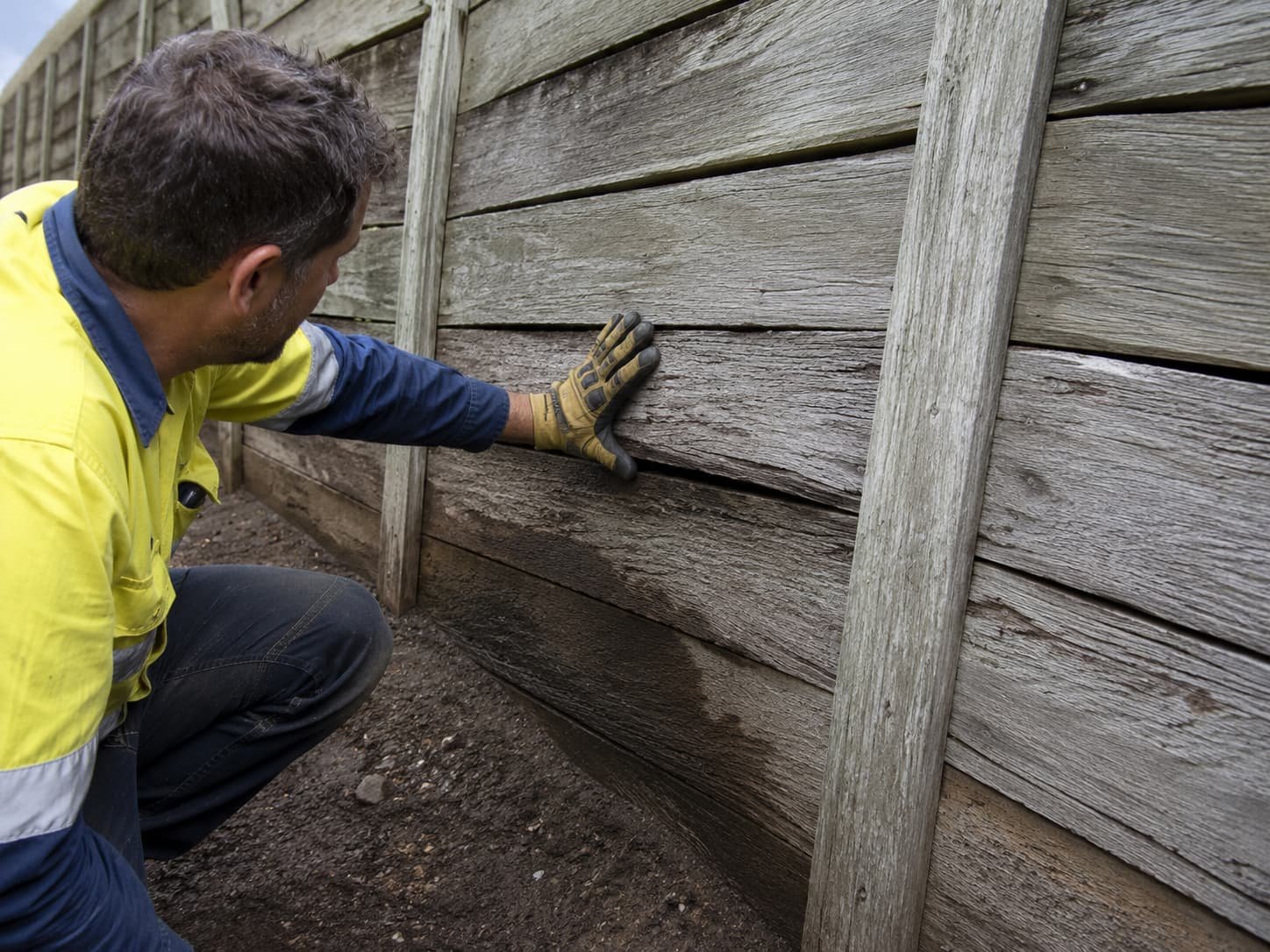
- Water staining or constant dampness — water is trapped behind the wall with nowhere to go.
- Soil or gravel washing out — material escaping from the face or around the ends after rain.
- Gaps opening at the top — the ground behind the wall pulling away, or paving lifting.
How Serious Is It?
A small crack or a slight lean isn’t always an emergency, but it is always a signal to get it checked. A wall that’s bulging or leaning noticeably is under real load and can fail suddenly — especially after rain — so don’t wait it out. The earlier you act, the more likely the fix is a drainage retrofit rather than a full rebuild, and the cheaper it stays. Building work in Queensland is regulated under standards overseen by the Queensland Building and Construction Commission, and a licensed builder can tell you quickly whether your wall is safe.
Repair or Replace?
It depends how far gone the wall is. A wall in the early stages of movement can often be saved by relieving the water pressure and improving drainage. Once it’s leaned or cracked badly, rebuilding the affected section is usually safer and better value than patching it. Either way, the fix almost always centres on drainage — see our drainage and repairs page for how we approach it, or our concrete sleeper retaining walls page if a rebuild is the better option.
How to Stop a Wall Failing in the First Place
Prevention is far cheaper than a rebuild. A wall built the right way — engineered footings, galvanised steel posts, and slotted ag-pipe with free-draining gravel and outlets behind the face — simply doesn’t get the chance to build up the pressure that destroys cheaper walls. On the Sunshine Coast, where the rain is heavy and the blocks are often steep, that drainage detail is the single most important part of the job, and it’s the part corner-cutting builders skip first.
If your wall is showing any of these warning signs, don’t wait for the next downpour to find out how serious it is. Get in touch for an honest assessment and a free, no-obligation quote.